When loads are transferred between multiple pieces of equipment, each hand-off can add time, coordination and potential congestion to the workflow.
Every move matters.
From unloading and transport to putaway and storage, every move can influence how quickly inventory becomes available to support the operation. Whether inventory is moved with a single forklift truck or multiple pieces of equipment, understanding the dock-to-stock workflow is the first step toward identifying the right equipment strategy.
What is dock-to-stock?
Dock-to-stock is the process of moving inventory from receiving through unloading, transport and putaway until the inventory is available for picking, replenishment or production.
Common dock-to-stock challenges
Moving product from receiving to storage often requires more time than expected, especially when dock doors, staging space and storage locations are spread across the facility.
Limited dock space, active staging lanes and frequent inbound traffic can make it harder for operators to maneuver efficiently and keep freight moving.
Aisle widths, rack height, load dimensions and putaway strategy all influence whether one truck can support the process or whether specialized equipment is needed for certain areas.
How warehouse layout impacts throughput
Warehouse layout helps determine whether dock-to-stock can be supported by one truck or whether multiple trucks are needed across the workflow.
In facilities with tighter aisles, higher-density storage or more specialized putaway requirements, another truck may be needed once product leaves the dock.
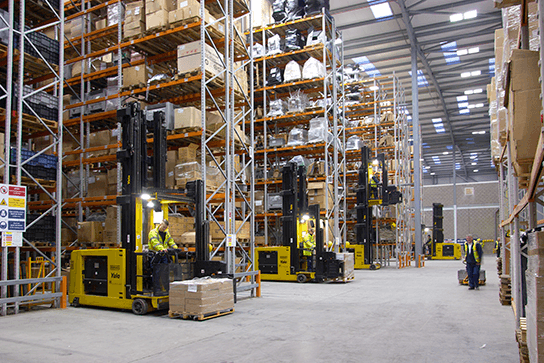
One-truck workflow
In wider-aisle operations, a counterbalanced forklift may be able to perform the following without transferring the load to another piece of equipment:
- unload trailers
- transport product
- complete putaway
Multi-truck workflow
A multi-truck workflow may use a counterbalanced forklift or pallet truck to
- move product from receiving
- rely on reach trucks or very narrow aisle turret trucks for putaway in storage areas with special requirements
- lift height
- aisle width
- maneuverability
3-wheel vs. 4-wheel forklifts for dock-to-stock
When comparing 3-wheel stand-up forklifts, 3-wheel sit-down forklifts, and 4-wheel sit-down forklifts, the best fit depends on how the truck will be used within the dock-to-stock workflow, including where it operates, how often operators change direction or enter trailers and how much distance they travel between tasks.
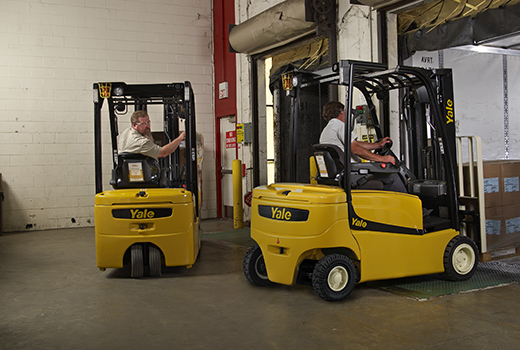
Built for operators who are constantly interacting with loads and navigating tight, busy environments.
Application Characteristics
- Tight docks
- Congested staging areas
- High pallet movement
- Limited maneuvering space
- Indoor operation
Operator Behavior
- Constantly getting on and off the truck
- Frequent direction changes
- Repeated trailer entries and exits
- Short travel distances
- High-touch handling throughout the shift
Maneuverability for dock-to-stock operations with comfort for operators who spend most of the day driving.
Application Characteristics
- Mix of unloading, transport and putaway
- Indoor/outdoor use
- Moderate travel distances
- Diverse daily tasks
Operator Behavior
- Remain seated for most of the shift
- Travel farther between tasks
- Moderate directional changes
- Less frequent mounting and dismounting
Designed for operations that prioritize transporting inventory over longer distances and frequently transition between indoor and outdoor environments.
Application Characteristics
- Longer travel routes
- Indoor and outdoor movement
- Uneven or bumpy ground
- Larger operating areas
Operator Behavior
- Long-distance travel
- More transporting than maneuvering
- Less frequent directional changes
- Fewer trailer entries
Find the right approach for your dock-to-stock workflow
There is no one-size-fits-all approach to dock-to-stock performance. The right solution starts with understanding inventory flow, operator behavior, warehouse layout and throughput goals.
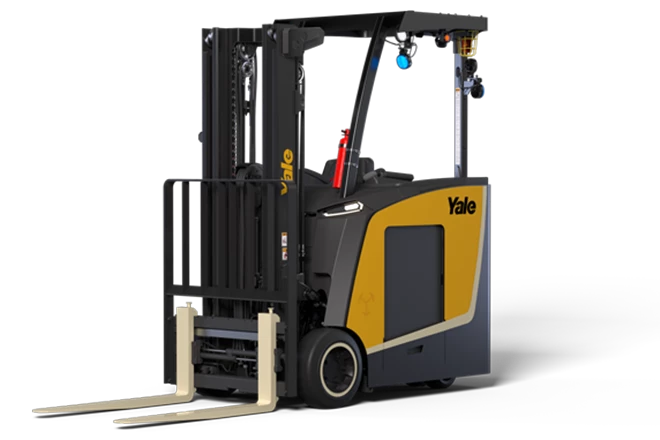
3-wheel stand-up electric forklift
Outstanding functionality for high throughput demands
ESC030-040AD
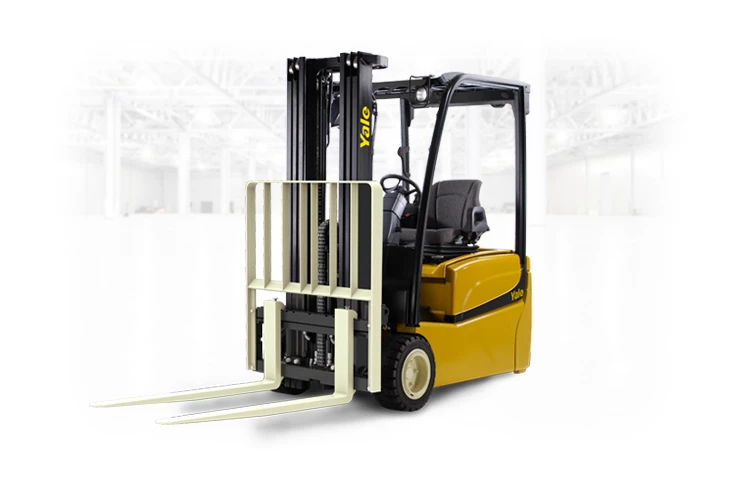
3 Wheel Front Drive Electric Counterbalanced Forklift Truck
Lasting performance and maneuverability to serve tight spaces, storage layouts
ERP030-040VT
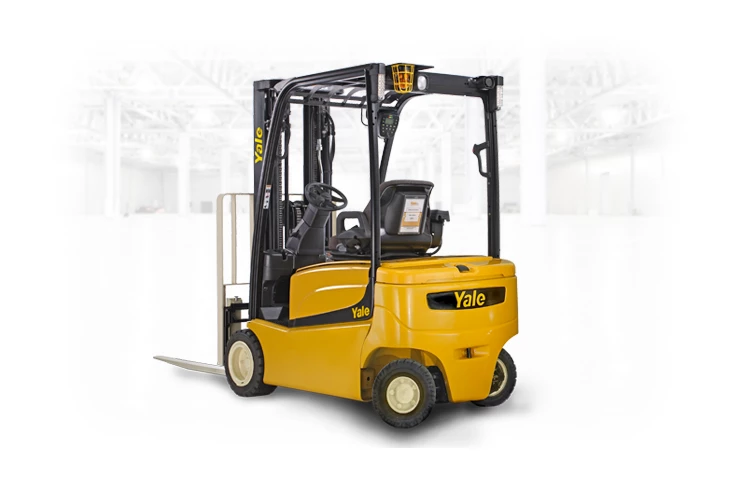
4 Wheel Electric Forklift Truck Pneumatic Tire
Versatile lift truck with strong performance and no emissions
ERP030-040VF
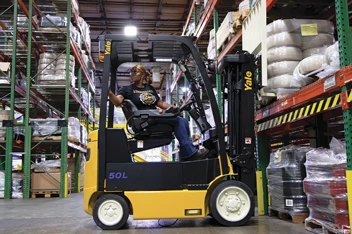
Electric Forklifts
Yale 3-wheel and 4-wheel electric forklifts powered by lead acid or thin plate pure lead batteries deliver productivity in loading and unloading, dock-to-stock, staging and replenishment
Solutions
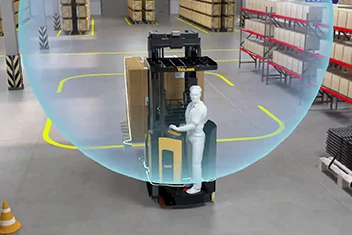
Yale Reliant™
Forklift operator assist technology
Support warehouse safety with a proven, award-winning technology that helps reinforce forklift operator best practices and awareness.
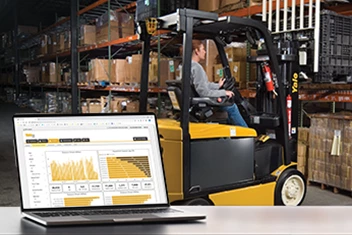
Yale Vision
Forklift fleet management technology
Take charge of your lift truck fleet with real-time telemetry data that delivers detailed insights into day-to-day operations.
Safety and awareness technology
Forklift lights and alarms
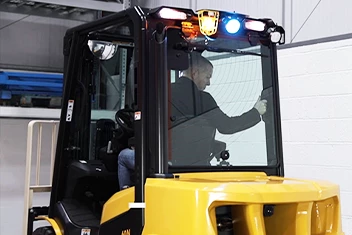
Increase awareness and help minimize risk with visual and audio alarm systems that enhance truck visibility and aid pedestrian safety.
Frequently asked questions
TRUCK FEATURES & PERFORMANCE
Dock-to-stock is the process of moving inventory from the receiving dock to storage where it becomes available for picking, replenishment or production.
It impacts inventory availability, throughput and labor efficiency.
Many operations aim for inventory availability within the same shift, while best-in-class operations often achieve it within a few hours.
It measures the time from arrival at the dock until inventory becomes available in the WMS.
Layout, travel distance, equipment availability, receiving processes, congestion and operator productivity can all affect cycle time.
Yes, in some wide-aisle operations where unloading, transport and putaway can be completed efficiently by one truck.
Multiple pieces of equipment may be needed when receiving and storage environments have different requirements, such as using rider pallet trucks for transport and reach trucks for putaway.
The answer depends on aisle width, travel distance, layout and operator behavior.
Layout influences travel distance, aisle width, storage density and material flow.
Three-wheel models are often selected for maneuverability, while four-wheel models are often used for longer travel routes and mixed indoor/outdoor operation.
Reach trucks are typically preferred in narrow-aisle, high-density storage environments.